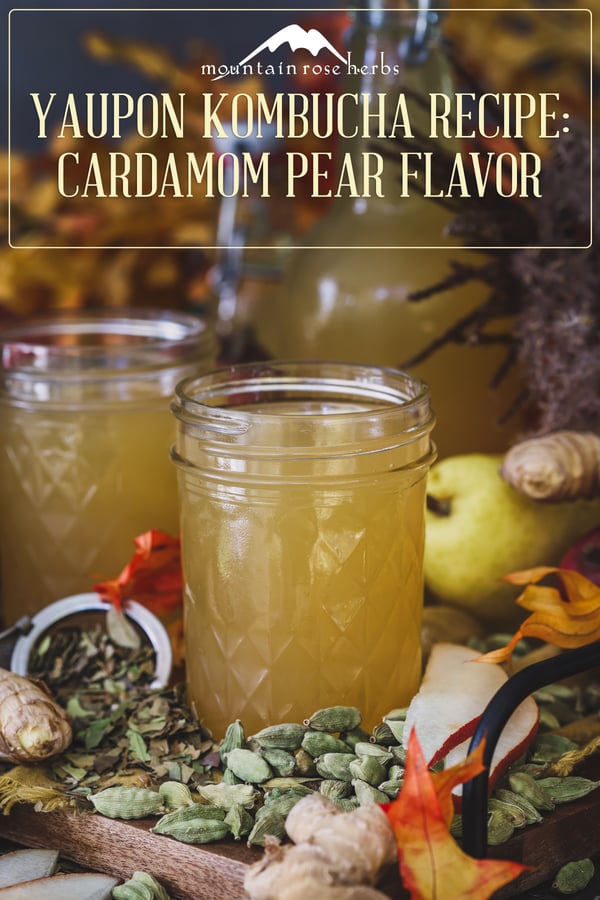

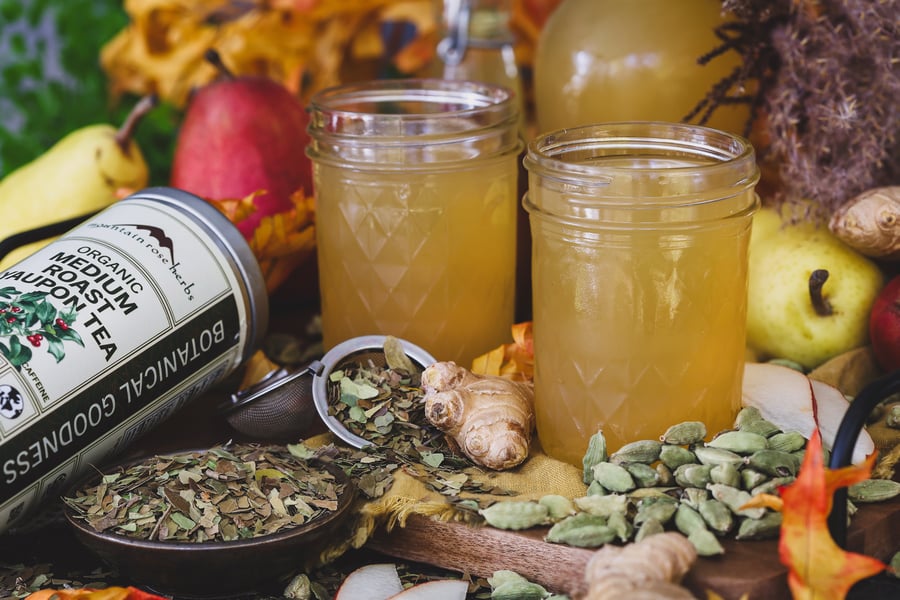
I love a crisp, refreshing glass of kombucha! I've been making my own kombucha on and off for about 6 years now and have experimented with lots of different teas and flavors over that time. This fall, I took to my kitchen to craft a festive pear, cardamom, and ginger kombucha using US grown yaupon. The results were beyond my expectations and most definitely worthy of sharing with you all!
For those of you who may not know, yaupon is North America's only native caffeinated plant, and it grows abundantly in the southern United States. I appreciate that this tea is not only geographically sustainable, but harvesting and working with this plant is also helping to reduce its overgrowth. In addition to its impressive sustainability profile, the tea is simply delicious! Putting it to use in kombucha is a great way to work with this smooth, tannin-free tea. You'll notice this kombucha has a bit less bite and astringency than most "'bouch" made with Camellia sinensis teas. This makes it especially enjoyable for those who may not usually like kombucha.
I hope you enjoy this outside-the-box kombucha recipe!
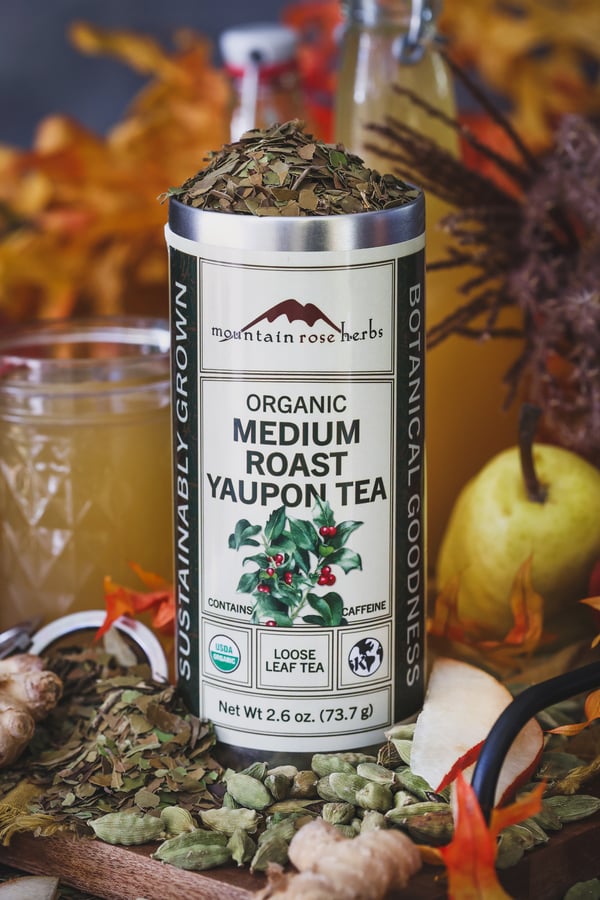
How to Brew Yaupon Kombucha
Makes about 1 gallon (scale to fit the size of your fermentation vessel).
Ingredients
- 1 gallon of spring or distilled water (chlorinated or treated water can harm the kombucha culture)
- 3 Tbsp. organic medium roast yaupon
- 1 cup organic cane sugar
- Kombucha SCOBY
- 1-2 cups starter liquid (brewed kombucha reserved from a previously brewed batch)
Directions
- In a large pot, bring water to a boil, then turn off heat.
- Add yaupon and sugar to water and stir to dissolve.
- Remove from the hot burner, cover with lid, and allow to cool to room temperature.
- Pour tea through a strainer into fermentation vessel (glass or lead-free ceramic work best).
- Add SCOBY and starter liquid.
- Cover container with a clean piece of cloth, or kitchen towel and secure with string or rubber band. Make sure the cloth cover is breathable but with a tight enough weave to keep fruit flies out.
- Taste kombucha periodically. Most batches will be ready in about 7 days, but the temperature of your home and how sweet or sour you like it will vary your optimal fermentation time.
- When fermentation has reached your taste preference, carefully remove the SCOBY and place it in clean jar.
- Reserve 2 cups kombucha to be used as starter liquid for your next batch, and store with your SCOBY.
- Use a funnel to pour the fermented tea into bottles.
Pro Tips: It's best to keep the starter liquid and SCOBY from each tea type separate from others. For example, if going from a black tea to a yaupon, it's best not to pour the yaupon SCOBY and starter liquid back in with your black tea SCOBY and starter liquid. The first time you transition from a black tea to yaupon, you will inevitably have to use some of the black tea starter liquid and SCOBY, however, after that first yaupon ferment, it's best to keep that in a separate jar or "SCOBY hotel".
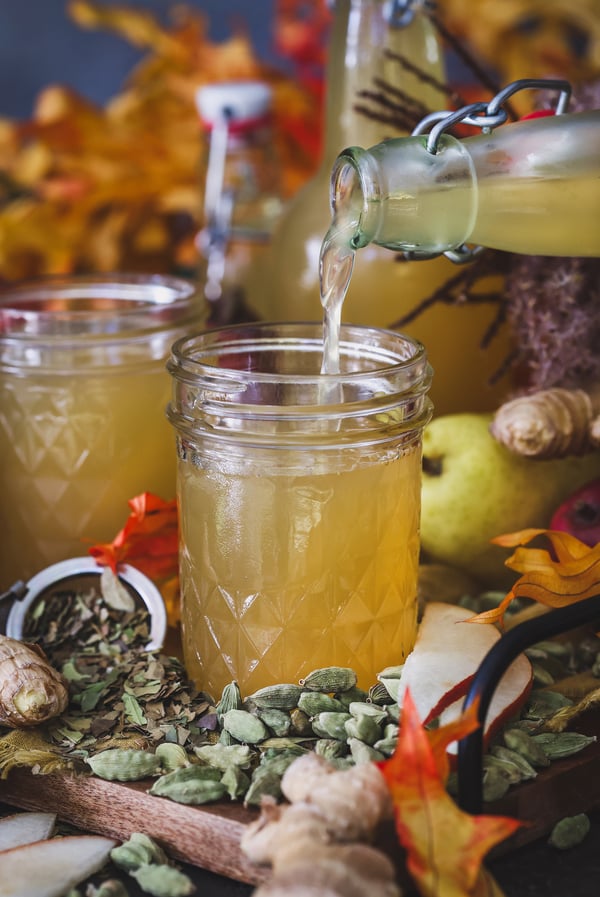
How to Flavor Yaupon Kombucha: Cardamom Pear for Fall
Ingredients
- 1 gallon brewed kombucha
- 2 cups organic pear juice
- 1 tsp. organic hulled cardamom
- About 1 Tbsp. organic fresh ginger (split into each bottle)
Directions
- After you have completed the first ferment and removed the SCOBY and starter liquid, add your pear juice and cardamom.
- Secure your breathable lid and let ingredients infuse at room temperature for 1 to 2 days.
- Taste infused kombucha for flavor and adjust as needed.
- When desired flavor is reached, strain out flavoring ingredients and bits of SCOBY.
- Add fresh ginger to the bottom of each bottle and fill the rest with your kombucha.
- To build carbonation, let sealed bottles sit on the countertop at room temperature for 2 to 3 days.
- Store finished kombucha in the refrigerator and consume within about 2 weeks.
Pro Tips:
- You can use apple cider or juice for this recipe with great results!
- The fresh ginger can be added during the second ferment instead of in the bottles if you prefer. I like having a little bit of ginger in the bottle, but that is more of a personal preference.
- Always clean your hands, utensils, and anything that might touch your kombucha with hot water and distilled vinegar.
- The mother SCOBY may sink or float on the top; both are okay. In 2 to 3 days, you may see a translucent, jelly-like mass floating on the top of your tea. This is a new SCOBY beginning to form. Leave it undisturbed so that the baby can grow properly.
- Separate the new SCOBY from your original one. You can give the new SCOBY to a friend or start a “kombucha hotel” in a separate glass jar. Simply include some kombucha starter liquid to cover each SCOBY. *When trying different teas, don't mix the SCOBY and starter culture from other teas. Instead, start a separate jar for the different teas you use.
- If the SCOBY grows mold, throw both it and the liquid into the compost and begin with fresh materials.
- Kombucha will naturally have a slight fizziness. To increase the carbonation and level of tartness, leave the bottled kombucha on a countertop for several days after bottling. Keep bottles stored in the refrigerator once fermentation is complete. Open with care.
Looking for more flavor inspiration?
Try These 3 Kombucha Flavor Combinations!
You may also enjoy: