
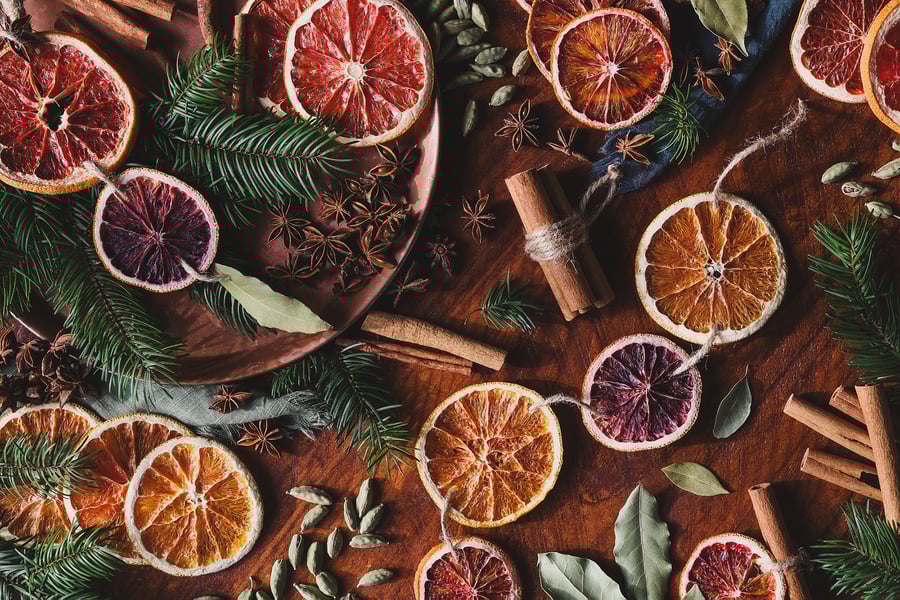
Lately, I’ve been really inspired by the trending “Pinterest perfect” aesthetic of dried orange slices used for home décor. It speaks to both my personal style and my low-waste way of living. Since I have been drying citrus slices for cocktails/mocktails, it was only a matter of time before I got crafty with them in other ways. With the holidays coming up, I began dreaming of a way to make some orange slice garland and sun catchers with an herbal twist.
I took to my home apothecary and began pulling out herbs in a variety of shapes, colors, and aromatics. After some wins and fails, I created this list of string-worthy botanicals for this craft.
Best Herbs, Spices, and Fruits for Natural Garland & Home Decor
- Organic Oranges
- Organic Grapefruits
- Organic Blood Oranges
- Organic Lemons
- Organic Limes
- Organic Cinnamon Sticks
- Organic Star Anise
- Organic Cloves
- Organic Bay Leaves
- Organic Cardamom Pods
- Organic Hawthorn Berries
- Organic Cedar
- Organic Juniper Berries
How to Dry Orange Slices & Other Citrus
Since the citrus slices are obviously the star of the show, the first step in this project is to cut and dry them. There are lots of tutorials on this, and some folks have different opinions on how to do this. This is the method that works for me with the tools that I have access to. This is a very forgiving craft, so do it the way that feels good to you.
Cutting: The key to drying citrus slices is to cut them thin enough to be transparent when dry, but not so thin that they will curl as they dry. I prefer to use a mandolin to cut even slices, though a sharp knife and a close eye also work well. Aim for about 1/4 inch.
Drying: After you have sliced citrus, gently pat them with a paper towel or cloth. Don't press too hard or you'll break more of the juice vesicles. You want to try to keep them as intact as possible.
Dehydrator: I have a "vintage" dehydrator that I found at a second-hand store many years ago. It works very well and has an adjustable temperature gauge. I set it to about 120°F. Most standard dehydrators you find these days have a set temperature of around 160°F. This temperature works well for oranges and grapefruit, but I have found that it heats lemons and limes a little too much, and they turn brown/black. I actually love that aesthetic, too, so I don't mind and will sometimes do that on purpose. I would be remiss not to mention that in case it's not your thing. When using a dehydrator, I will dry them for 2-3 days continuously, and once or twice a day, switch the trays around since the bottom dries more quickly.
Oven: The lowest setting on many ovens is 170°F, though this may vary. You'll want to use your lowest possible temperature setting. Drying with this method will take 4-6 hours, which for me is only possible on the weekend. I start in the morning and lay each slice out on a piece of parchment paper-lined cookie sheet. Place in the oven and flip each piece every 30-60 minutes. This method is a lot more hands-on, which is why I prefer using a dehydrator.
Storage: Winter is the peak time for citrus, so I usually dehydrate a bunch at once when they are seasonal. This requires me to consider storage. After drying, I always let my slices sit out for an extra 24 hours to fully cool and for any remaining moisture to leave. Next, store in an airtight glass jar with a few desiccant packets.
Tips for Stringing Orange Slices and Herbs for Garland
Now that the prep work is done, it's time for the fun part! Crafting orange slice garland is a largely forgiving process, though some ingredients like bay leaves require a gentle hand and some patience. Here are some tips for stringing:
Citrus: Using a sewing needle and string (I like jute string), pierce through the top and out of the bottom of your organge slice. There is no need to knot; it will stay in place as is.
Bay Leaves: This ingredient can be a little finicky since it's brittle. I like to string them, but you can also use hot glue. You can string it in two ways, and I like using both to offer more variety and texture to the piece. By piercing just the top of the bay leaf, it will sit more horizontally and allow for more movement. You can also string the top and bottom as you did for the orange slices. This will help it stay in place more and also appear more vertical. Alternating the two offers a nice texture. (You can see in the photo below.)
Cinnamon Sticks: I like to simply tie the cinnamon sticks on, as puncturing the cinnamon neatly is very difficult and inconsistent from piece to piece. I also like the horizontal look of stringing them this way.
Star Anise: This ingredient adds a lot of flair, but is hard to string. That is why I hot glue this ingredient. I will glue 2 pieces against each other so whatever side you are looking at, it shows the star anise and not the glue. It even looks cool from the side!
Cedar: Cedar can be easily tied on in whatever way looks good to you. It is very forgiving.
Berries & Seeds: Other small and round botanicals are generally best glued on. Unless you have fresh berries that can be sewn in, dried berries and seeds can be hard to string.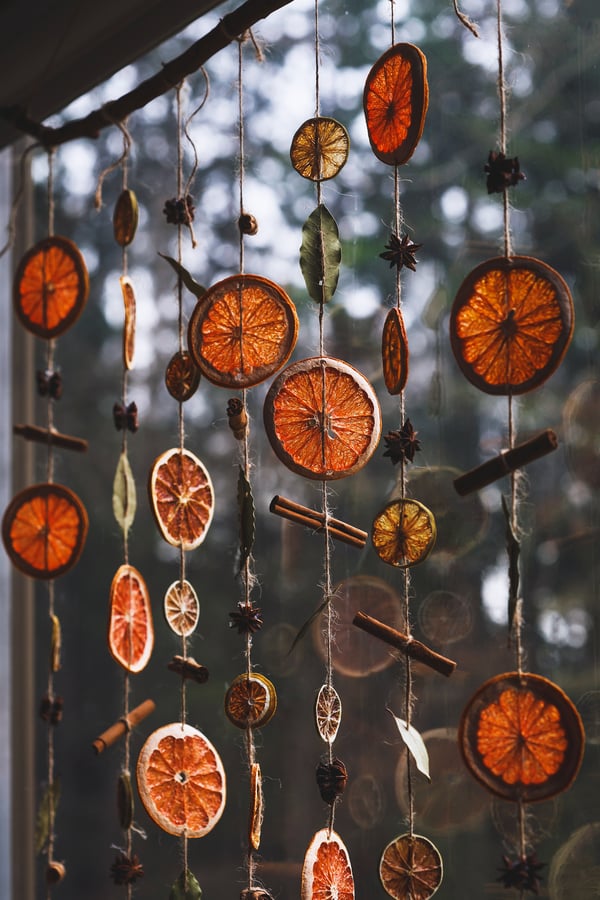
Where to Place Orange and Botanical Strings
- Strung from a harvested tree branch and hung in front of a window as a sun catcher
- Hung around the frame of a window for a pop of color
- Above doorways in the home
- Used as a garland for holiday décor
- As a statement piece in the bathroom
- Made into a kinetic sculpture, like a mobile or other moving art
- Added to a round frame and hung like a chandelier
Waste Not, Want Not: Zero Waste & Upcycling Hacks
This project can truly be zero waste. Here are some tips on ways you can use each part of the citrus and upcycle it once you are done with it.
Zero-Waste Tips When Drying Orange Slices: When cutting your citrus, you'll notice that the end cuts are not very pretty, and you likely don't want to use them for this craft. Those can be made into bitters to support digestion, infused into vinegar for a natural cleaning solution, or dried and powdered into a body scrub.
Upcycling Tips for When This Craft is Beyond Its Prime: Eventually, your masterpiece will age to the point of needing to be replaced. When that day comes, these botanicals can be used in a simmer pot to get the remaining aromatics out before composting. Another idea is to make homemade fire starters. You can really get creative with this.
I hope you find this as fun, fabulous, and functional as I did! Happy Crafting!
Looking for more Inspiration?
Check Out These Natural DIY Fire Starters!