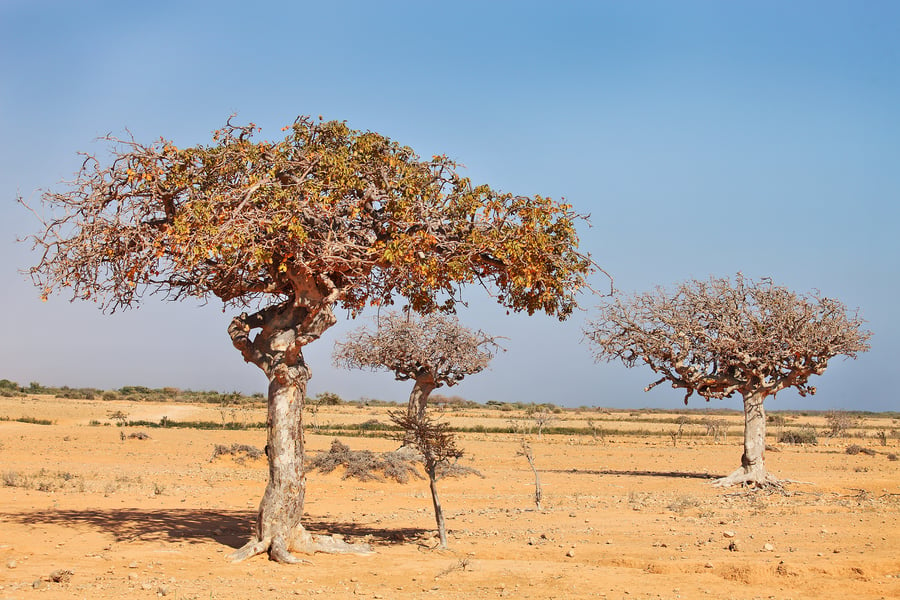
Myrrh (Commiphora myrrh) has been a cherished botanical for thousands of years. Native to the Horn of Africa and the Middle East, this sacred tree has been called upon for traditional medicine, religious incense, and perfumery for over 5,000 years. It has a long lineage of folklore and spirituality, and was so prized that it was used to anoint kings and scent the fabrics of pilgrims traveling to holy places. It's no less adored today.
In our modern times, myrrh is commonly used in a host of internal and topical applications. You will most commonly see it prepared as a tincture, essential oil, infused oil, or as a burnable incense. Each preparation offers its own unique strengths, which is part of what makes myrrh such an enduring favorite in traditional herbalism and botanical self-care.
As a tincture, myrrh is often used internally in small amounts and is especially valued for its bitter, resinous qualities. Traditionally, it has been used to help move stagnation while toning and tightening tissues. Its intensely aromatic bitterness can be an acquired taste, but that same astringent quality is one reason it has long been appreciated in herbal preparations for oral care. In fact, one of my favorite ways to work with myrrh is as a mouthwash ingredient. It admittedly does not taste very good, but my gums have really benefited from using it over time.
Myrrh is also a wonderful ingredient for natural skin care. The essential oil and infused oil of myrrh are commonly called on to cleanse, clarify, tone, and support the skin’s overall appearance. You’ll often see myrrh featured in products intended for mature skin, including facial serums, lotions, salves, balms, and masks.

Sourcing Myrrh Responsibly
Because myrrh is a precious resin, it should be honored from harvest to use. Like many botanicals, increased demand for this resin has led to unethical harvesting practices. We are proud to say that the organic myrrh resin and organic myrrh essential oil offered by Mountain Rose Herbs are both FairWild certified. This ensures the resin is harvested in a way that is ecologically sustainable, and that wild harvesters receive fair compensation and treatment.
Mountain Rose Herbs is also a sponsor of the American Herbal Products Association (AHPA) Foundation for Education and Research on Botanicals (ERB). One of the projects our sponsorship supports is a Myrrh Assessment study, which aims to improve transparency and sustainability in the global supply chain of myrrh resin.
These are some of the ways Mountain Rose Herbs ensures it is supplying this precious botanical responsibly and protecting it for generations to come.
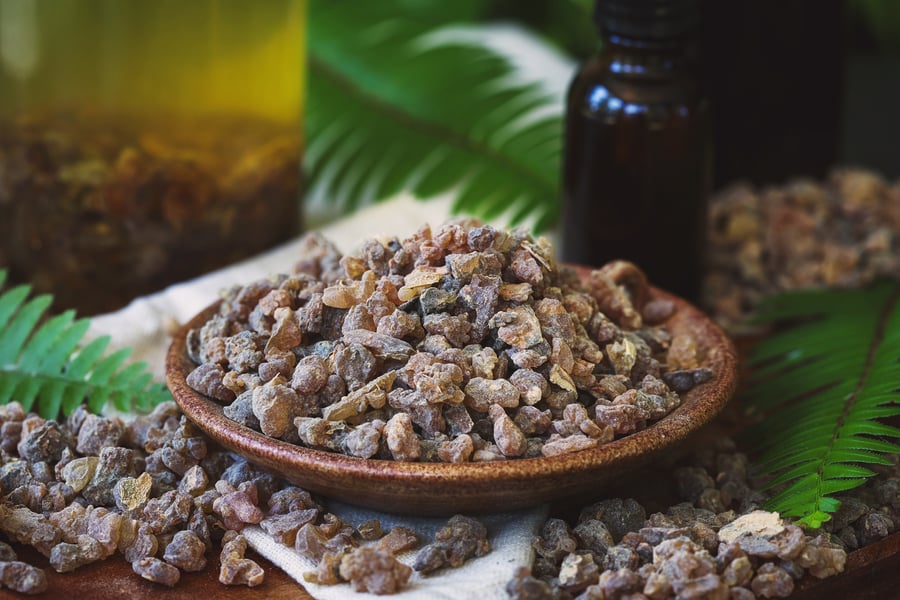
How to Make Myrrh Tincture
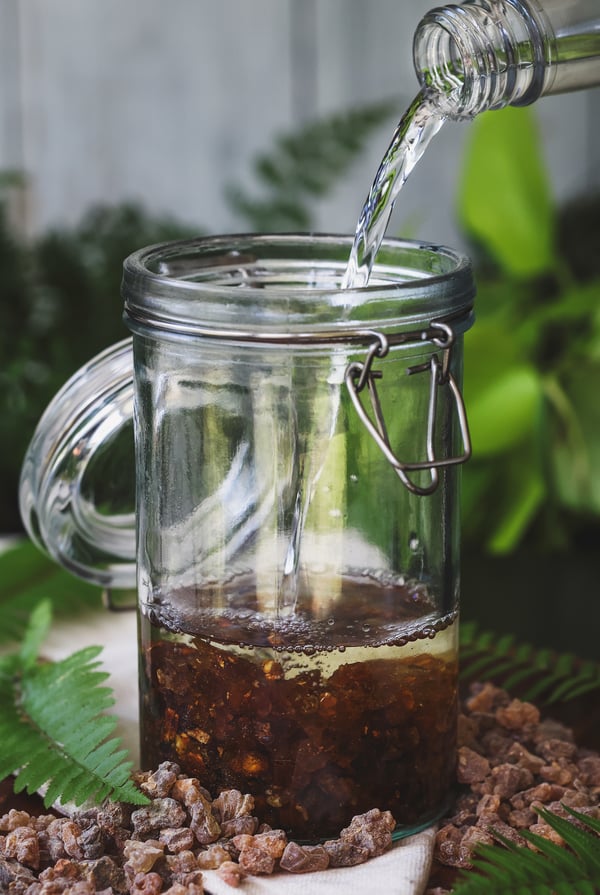
While there are many ways to work with myrrh, one of the most universal and convenient is in its tincture form. Like all resins, myrrh is best extracted with a high-proof alcohol. This helps to pull the beneficial constituents from the hard and sticky resin material.
Ingredients
- 1 ounce organic, FairWild myrrh resin
- 4 ounces organic grain alcohol (100 proof is ideal)
Directions:
- Add resin in a mortar and pestle or bowl and smash the resin into small pieces to increase the surface area.
- Pour the prepared myrrh resin into a clean, dry glass jar and top with alcohol. Make sure the resin is fully covered.
- Place lid on and shake gently.
- Allow the tincture to macerate for 4 to 6 weeks in a cool, dark place, shaking the jar every few days.
- Strain the resin from the alcohol and transfer the finished tincture to amber glass bottle. Don't forget to label it!
How to Use Myrrh Extract
- Supplement: Used internally, as needed, to help cleanse, tighten, and tone tissue.
- Mouthwash: As an exceptional oral hygiene support! If the flavor is too much, you can tone down the bitterness by mixing with peppermint leaf extract. Add 1-2 drops of tincture to about 1 ounce of water.
- Skin Care: Added to pre-made lotion bases and sheet mask recipes. You can also use myrrh in serums and salves, but I prefer to use an infused oil or essential oil for those.
Safety Notes: Not for use during pregnancy except under the supervision of a qualified healthcare practitioner. The bitter taste of myrrh may cause nausea and vomiting in persons with sensitive stomachs. We recommend that you consult with a qualified healthcare practitioner before using herbal products, particularly if you are pregnant, nursing, or on any medications.
Looking to Learn More About Sustainable Wild Harvesting??
Read About Our FairWild Commitment
You may also be interested in:
- Frankincense & Myrrh Hand Balm Recipe
- What Are Resins & Gums in Plants
- What is Opopanax Resin & How Do You Use It?
*These statements have not been evaluated by the Food and Drug Administration. These products are not intended to diagnose, treat, cure, or prevent any disease. We recommend that you consult with a qualified healthcare practitioner before using herbal products, particularly for children or those who are pregnant, nursing, or on any medications. For educational purposes only.