
In addition to ensuring customers receive fresh, vibrant, and potent botanicals, one of the core responsibilities of the Mountain Rose Herbs Quality Department is to make sure the company is operating in compliance with all current food safety practices. These rules are defined and enforced by the Food and Drug Administration (FDA) and are a critical component of our Food Safety Plan. These rules may sound like they only apply to large-scale manufacturers, but as a company that offers both food and dietary supplements, we are regulated under the very same rules.
A core concept in food safety is that of Good Manufacturing Practices. These federal rules, when concerning food, were established in the late 1960’s as a continuation of groundbreaking laws like the 1906 Pure Food and Drugs Act and the 1938 Federal Food, Drug, and Cosmetic Act. These were attempts to protect consumers at a federal level from unregulated food and drug production that was responsible for many notorious cases of negligence and fraud, some of which had infamous and deadly impacts on consumers.

Since their inception, these bedrock rules on how to operate a food manufacturing facility safely have evolved to meet an increasingly complex and global supply chain, resulting in what we now call current Good Manufacturing Practices (cGMPs).
At their simplest, cGMPs are the minimum requirements a company must maintain when manufacturing, processing, packaging, and holding food. This ensures they have the fundamental tools necessary to provide a safe product to consumers. While this was always the basic goal, the implication of the term “current” requires companies to continue updating their safeguards as new technologies and standards evolve throughout time.
cGMPs are organized into broad categories that set a company up to succeed in a safe and hygienic manner. These include:
- Documentation and record keeping
- Training of employees
- Sanitation and maintenance of facilities
- Establishing reliable and reproducible production practices
- Testing-based quality assurance methods
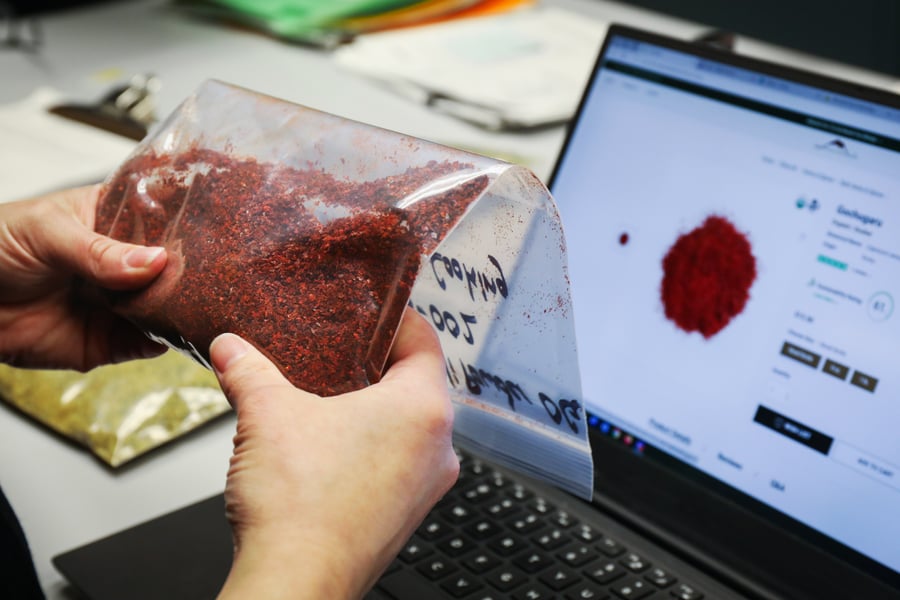
How We Comply With cGMP in Practice
There are many examples of how we operate within cGMP, and an example of this complexity can be found in something as simple as an employee hand-filling a bag of Organic Peace Tea.
Space and Equipment: First, the production station is made from easily cleanable material in a room that is temperature-controlled and free from leaks or pest activity. All the records of the daily sanitation, as well as the required maintenance of the table and the scale, are accounted for.
Our Staff: The Mountain Rose Herbs team member responsible for filling the bags of tea will have training records on file and will be wearing clothing appropriate for food production (think hair nets and aprons).
Ingredients and Labels: The production will be documented with a batch record and will follow an established set of verification checks that ensure the right formula and materials have been used, and that all information on the label is correct.
Storage and Shipment: Once produced, the material must be stored in food-grade packaging in a climate-controlled warehouse. Every pound of material must be accounted for in our digital inventory system to ensure full traceability of the supply chain.
As you can see, there is not a process or touchpoint here at Mountain Rose Herbs that has not been thoroughly analyzed with consumer safety in mind. Not to mention the product itself will have come from a supplier who has been verified as having similar safety standards. All these steps, and more, are required under cGMPs and must be verifiable as being completed during an unannounced FDA inspection.

A Step Further
The proactive and preventative nature of cGMPs is further demonstrated in their relationship with the Food Safety Modernization Act (FSMA). This 2011 overhaul of the country’s food safety system was the largest since the 1930s and sought to fundamentally change it from a system that responded to foodborne illnesses to one that prevents them.
cGMPs are a baseline prerequisite of being compliant with FSMA, something that all companies must follow. Beyond that foundation, FSMA also enforces other food safety frameworks that are more specific, such as foreign supplier verification, sanitary transportation rules, and strategies to mitigate intentional adulteration in the supply chain.
Why We Voluntarily Choose Third-Party cGMP Audits
While Mountain Rose Herbs has always prided itself on proactively evolving our standards to meet the changing regulatory environment, we wanted a clearer way to demonstrate our commitment. This is why we recently underwent a voluntary audit to gain third-party accredited food safety certification through SGS. This certification agency is recognized as a global leader in the industry and has been in operation since 1828. A part of holding this certification is a yearly requalification audit, which will allow us to continue improving our systems over time. We are committed to supplying the community with the highest quality, potent botanicals for home herbalists, practitioners, and businesses alike. This is one of the ways to ensure we are doing just that.
Want to Learn More About Our Quality Standards?
Read How We Handle Sourcing, Testing, and More
You may also be interested in:
- How to Determine High-Quality Herbs
- Why We Go Out of Stock
- How to Read a Certificate of Analysis From Our Quality Lab