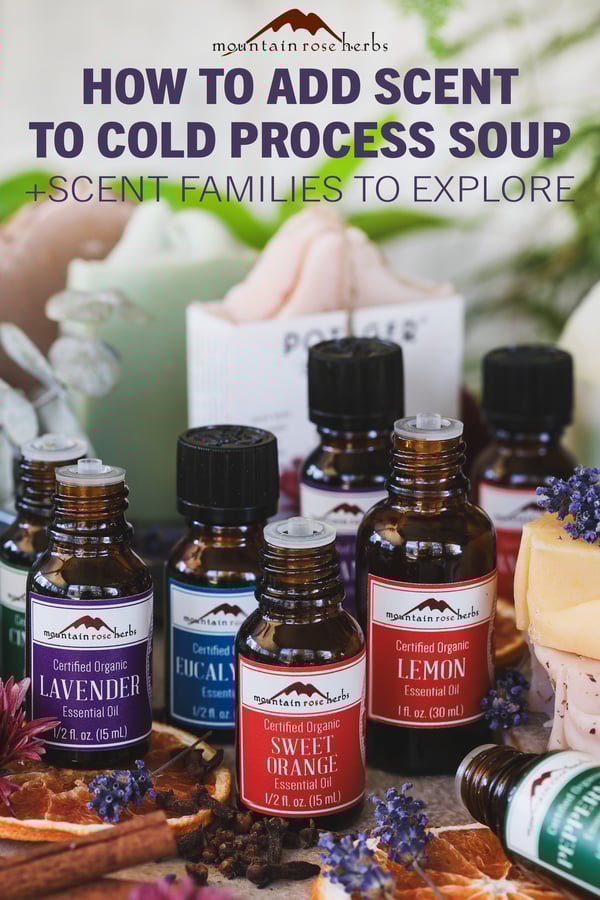


A handcrafted scented bar of soap is both grounding and quietly luxurious. The fragrance that greets you in the shower or at the sink isn’t just an afterthought…it’s part of the sensory aromatherapeutic experience of bathing. In cold process soapmaking, scent is woven into the art and chemistry of the craft. Understanding how cold-process soaps are scented, and how to choose a blend that suits your mood and your skin can help deepen your appreciation for every bar.
Essential Oils vs. Fragrance Oils
When it comes to scenting cold process soap, makers typically choose between essential oils and fragrance oils. At Potager we use only certified organic essential oils, but let’s consider both for a moment.
Essential oils are derived from plants; from the flowers, leaves, bark, peels, resins, and roots, through processes like steam distillation, cold pressing, or enfleurage. For those who love a more natural approach, essential oils offer scents that are botanically true, complex, and evocative of the natural world. There’s an authenticity that many people deeply value. The use of pure organic essential oil in cold process soap also introduces the therapeutic element of aromatherapy into each bar.
Working with essential oils when making soap requires skill. Some essential oils fade in the high-pH environment of cold process soap. Some accelerate trace (thickening of soap mixture), cause seizing (turning solid instantly), or discolor the final bars. Also, even though they are natural, some essential oils are unsafe in concentrated amounts. An understanding of chemistry,safety, and a lot of trial and error is required to craft the perfect bar of soap.
Fragrance oils, on the other hand, are lab-created aromatic compounds. They are not plant-based and while they allow you to make soap scented like Buttercream Frosting, they do not provide any aromatherapeutic benefits. Some suppliers claim to offer high-quality, skin-safe fragrance oils specifically designed for bath and body products, but even in this instance seizing can still occur and testing is required.

How Scent Is Added to Cold Process Soap
In cold process soapmaking, we mix the base organic oils with our lye solution and blend until a trace is reached. This process is called saponification. We recognize a trace when the emulsion leaves a trail. Once the mixture has saponified, we add any organic botanicals and clays or resins that will be incorporated into the bar. We are now ready to add our essential oils.
Beyond crafting the perfect scent blend, which we will address in the next section, there are three main factors to consider when adding essential oil to our soap mixture. These are Timing, Safe Usage and Anchoring.
Timing plays an important role in how we blend and incorporate scent into our soap. Some scents like clove and cinnamon essential oil accelerate saponification to the point where soap could literally seize and become solid in seconds. These essential oils and others are added strategically to maintain control. Lavender is a very forgiving essential oil and the soap maker has time to work with the mixture when incorporating this particular scent. Each essential oil or fragrance oil has its own timeline for how it affects saponification. This must be carefully taken into consideration with each blend.
Whether you are working with essential oil or fragrance oil, Safe Usage must be an integral part of your formulation. Responsible soap makers follow IFRA guidelines. IFRA stands for the International Fragrance Association. In their own words, “IFRA is the voice of the global fragrance industry, dedicated to the safe, responsible, and sustainable use of fragrance.” IFRA offers a wealth of information to help soap makers craft responsibly. Put simply, IFRA will let you know the maximum amount of essential oil you can safely incorporate into your recipe.
Essential Oils are VOC’s (Volatile Organic Compounds). This means they volatilize or dissipate into the atmosphere over time. On the positive side, this helps with aromatherapy, as we actually inhale molecules of each essential oil. On the flip side, it is also why the scented bar that was so robust today starts to fade within a short time. This is where Anchoring plays a part. The experienced soap maker uses various natural clays, botanicals, resins and even certain essential oils like patchouli as fixatives to help the essential oil scents last longer. This is a subtle but important artisan skill developed through practice.
When all is in balance, you end up with a bar that lathers beautifully and releases its aroma gently with use, never overpowering, but delightfully present.
How Blends are Created
Blending essential oils for soap making is an art that involves harmonizing top, middle and base notes. Top notes, like citrus or mint, offer a fresh uplifting aroma that evaporates quickly. Middle notes such as Lavender or Rosemary form the heart of the blend, bringing balance and complexity. Lastly, base notes like Patchouli or Balsam provide depth and longevity. Sometimes a soap maker will craft a “single note” blend, meaning they will use one scent. It’s a simple yet elegant way to create a clean, straightforward fragrance profile. Potager does that with their French Lavender.
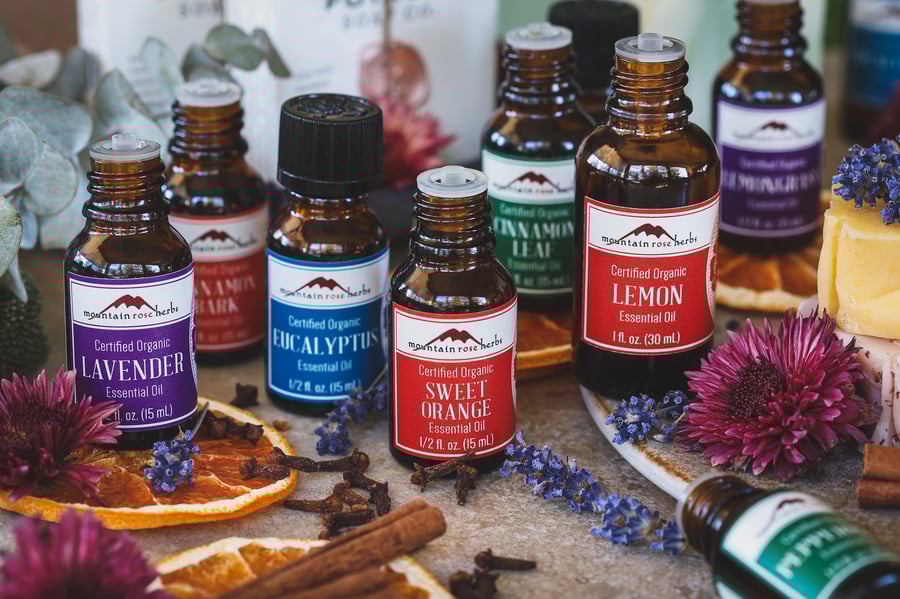
7 Popular Scent Families
Whether you’re choosing soap for yourself, for gifts, or simply exploring, these scent families tend to be enduring favorites:
French Lavender (Lavender Grosso)
Calming, classic, and timeless. Lavender essential oil is beloved for its soothing aromatic profile and is often associated with relaxation and unwinding. Bathing with a bar of French Lavender soap is a great bedtime ritual.
Peppermint or Mint Blends
Cool, invigorating, and awakening. Mint offers a brisk, revitalizing scent that many people love for energizing the senses. Peppermint soap can also help relieve minor headaches.
Herbal & Green (Rosemary, Lemongrass, Eucalyptus)
These scents feel fresh, grounded, and naturally “spa-like,” ideal for people who love a botanical, wellness-forward experience.
Floral (Geranium and Ylang Ylang)
Soft, romantic, and sometimes a bit luxurious, florals add elegance and sensory depth to a soap.
Woodsy + Earthy (Balsam and Patchouli)
Deep, grounding, and slightly mysterious—wonderful for those who love forest-inspired aromas or more gender-neutral blends.
Spice Notes (Cinnamon Leaf, Clove, or Seasonal Blends)
Perfect for cooler months or anyone who enjoys warm, cozy, subtly sweet spice profiles.
Citrus Blends (Orange, Lemon, Grapefruit)
Bright, uplifting, and cheerful. Citrus scents feel clean, sunny, and refreshing—perfect for morning showers or kitchen soap bars.
Exploring different scent families can be a joy in itself. Just like tea, perfume, or chocolate, each category evokes emotion, atmosphere, and memory.
Crafting Soap Is an Acquired Skill
Cold process soapmaking is incredibly rewarding, but it also requires patience, precision, curing time, safety knowledge, quality ingredients, and quite a bit of practice. If you love the idea of beautifully scented natural soaps but don’t necessarily want to invest in learning the craft, and sourcing the ingredients, check out Potager Soap.
We create thoughtfully crafted, beautifully scented cold process soaps with care, intention, and respect for both skin and sensory experience.
Looking for Natural Soaps, but Don’t Want to Make Your Own?
Check Out Potager Soap
(Made with Mountain Rose Herbs Essential Oils)
You may also be interested in:
- The Art and Science of Blending Essential Oils
- DIY Laundry Soap Liquid with Soap Nuts
- Naturally Scented Candle Recipe: Lush Earth