
If you live in the Northern Hemisphere, you are likely familiar with the descent into the colder months of the year. Meeting colder temperatures is a humbling experience for any living being. Cold is a teacher—it shows us how to keep warm through connection, through acts of love that warm the heart. It also teaches urgency. Think of woodland animals scurrying as temperatures drop, gathering what they need to prepare for winter or hibernation.
One lesson I return to each year in the presence of cold is how vital my body truly is. Is my body capable of carrying itself through the winter months? Of course—with the help of wool socks, scarves, and thrifted knit sweaters. Still, I find myself asking: what am I doing to support my circulation during winter?
Herbs to Support Circulation
Catalyst herbs
In herbal formulation classes, you may have learned about “driver” herbs, often referred to as catalysts. These herbs are traditionally included in formulas to bring warmth and movement, helping guide herbal actions throughout the body. Catalyst herbs are typically warming in nature and are used to enliven and enhance a blend.
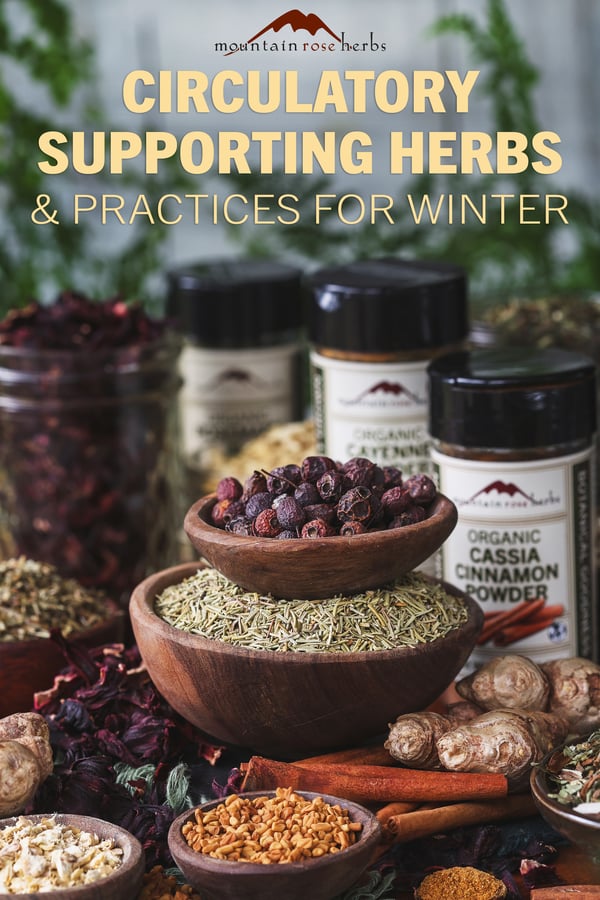
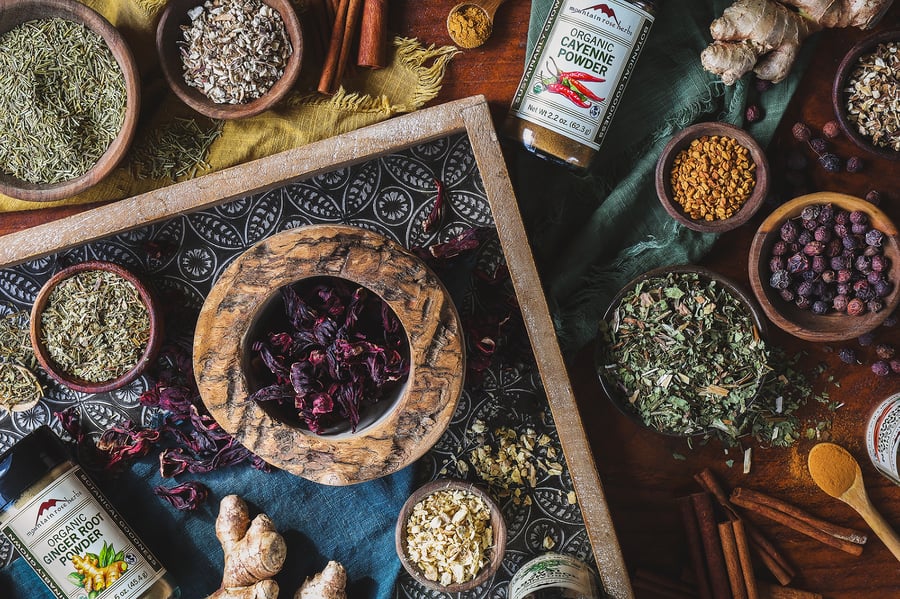
Cayenne, ginger, cinnamon, rosemary, and the lesser-known—but personal favorite—juniper are commonly worked with in this way. They are traditionally chosen to bring warmth to areas that feel cold or stagnant. During the colder months, tending my circulation looks like adding catalyst herbs to daily mineral-rich infusions, incorporating rosemary, cayenne, and cinnamon into warming meals and lattes, or infusing ginger into sesame oil for daily body oiling.
Circulatory tonics
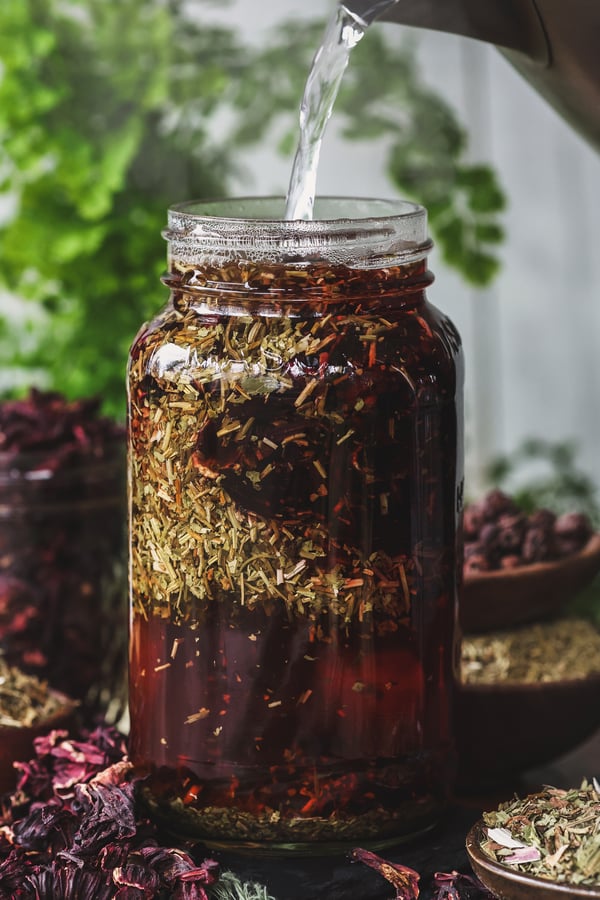
Creating your own herbal infusions is a simple, grounding way to build a daily relationship with nourishing herbs. Gotu kola and rosemary have long been associated with clarity and focus and are traditionally valued for their affinity with circulation throughout the body, including the head and brain.
Hawthorn is another beloved plant, traditionally associated with the heart and the movement of blood. An often-overlooked aspect of hawthorn—particularly the leaf and flower—is its flavonoid content, including oligomeric proanthocyanidins (OPCs). These compounds are traditionally appreciated for their relationship with liver vitality. In many holistic traditions, the liver is viewed as a central regulator of warmth and metabolic rhythm, especially during colder seasons when the body works harder to maintain internal balance. To me, hawthorn flows freely between the liver and the heart, an axis that often asks for a little more care during the colder months.
Hibiscus—vibrant and tangy—contains antioxidants, which are known for their relationship with the body’s internal balance. It is also commonly associated with nitric oxide production, a pathway often discussed in relation to blood vessel relaxation and the movement of blood. Its tangy nature, like schisandra, has a way of putting you back in your place, much like the cold itself does. Hibiscus reminds me to be present in each waking moment.
Liver-Supporting Herbs
The liver is a quiet powerhouse—like the coworker or mother constantly putting out fires behind the scenes. Supporting the liver can be an important part of staying warm and comfortable during winter. Cold hands and feet or chills after a large meal are often discussed in traditional systems as reflections of how the body prioritizes energy. Digestion requires fuel, and the body may draw warmth inward to tend that central fire.
Burdock, dandelion root, and yellow dock root are long-standing herbal allies traditionally worked with to support liver function and overall metabolic balance. These are the herbs you want on your team when tending the body’s internal office.
Foods That Support Circulation
Blood flow is foundational to circulation, and many foods are traditionally enjoyed for their relationship with vascular relaxation and movement. Nitric oxide–rich foods such as beets, dark leafy greens (kale, spinach, arugula), and garlic are often highlighted for this reason. Liver-loving foods—rainbow chard, garlic, onions, brassicas (broccoli, kale, Brussels sprouts, cauliflower, cabbage), and antioxidant-rich produce—also play a supportive role.
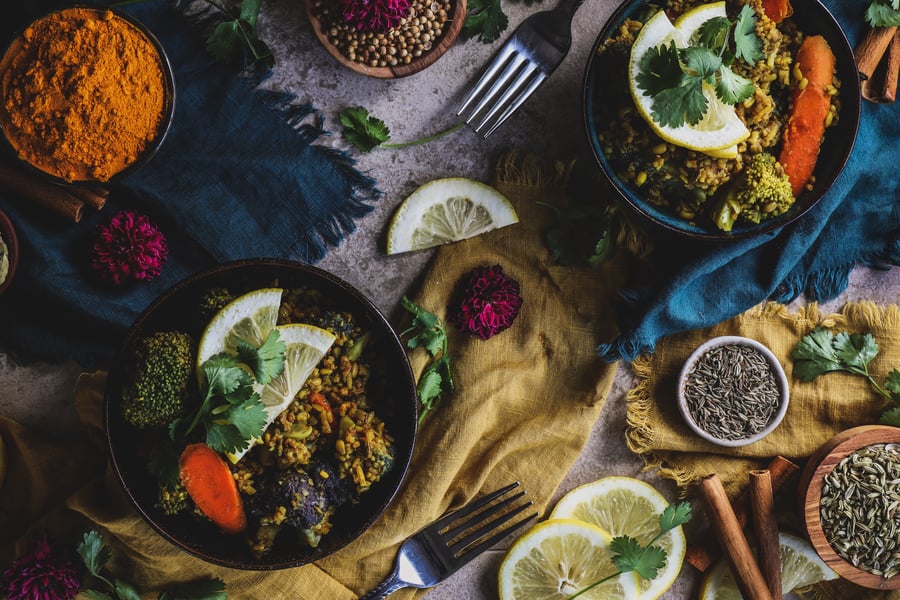
In colder months, we naturally gravitate toward warming meals like kitchari, rich with circulatory spices such as fennel, fenugreek, ginger, and cinnamon. Starchy squashes—pumpkin, butternut, and acorn—along with sweet potatoes provide steady fuel and grounding energy. Ancient grains like wild rice, brown rice, and quinoa, when paired with healthy fats and proteins such as avocado, pasture-raised meats, or lentils, offer a stabilizing foundation through winter.
On cold mornings, one of the simplest ways to tend inner warmth is to be mindful of how the day begins. Iced drinks can quickly dampen metabolic fire. In traditional frameworks, some foods and beverages are considered constitutionally cooling—coffee and matcha among them—even when served hot. Ginger and cayenne, by contrast, are regarded as constitutionally warming and are often chosen to counterbalance winter’s chill.
Vitalist Practices to Maintain Healthy Circulation
Movement is one of the most underestimated ways to tend circulation and mental well-being during colder months. Bundling up in wool layers and heading out for a walk is medicine in its own right. Practices that engage the lymphatic system—gentle bouncing, jumping, or dry brushing before a shower—are traditionally used to encourage movement throughout the body.
Ending a shower with cooler water can awaken the skin and senses, while body oiling with ginger-infused sesame oil offers a warming, grounding ritual that nurtures both the nervous system and circulatory rhythms.
Winter and the cold humble us, reminding us to slow down and listen more closely to the language our body is speaking. Is something feeling out of place? Is there anything that jumps out at you that may be correlated with something that is lacking? In what ways can you support your body to keep you warm from within? Working with herbs, food, and adopting new daily practices in this season is less about fixing and more about building a relationship with our bodies—learning how the body responds to the cold when we treat it with care and attention. By honoring circulation as a language of the body, we may arrive at a state of steadiness and connectedness through the winter months.
Want to Learn More From Michelle?
You Can Find Her At BouquetOfBasilHerbals.com!
You may also be interested in:
- Warming Lotion Bars for Autumn and Winter
- 3 Warming Tea Blends for Winter
- Golden Milk Latte Recipe with Rose