
You don’t have to stretch your imagination far to understand Black herbalism. You’ve likely already lived it. A kitchen with worn counters. A pot that gets used more than anything else in the house. Roots drying on a windowsill. Someone older than you telling you, “Drink this. You’ll be alright.”
How the Teas Were Prepared
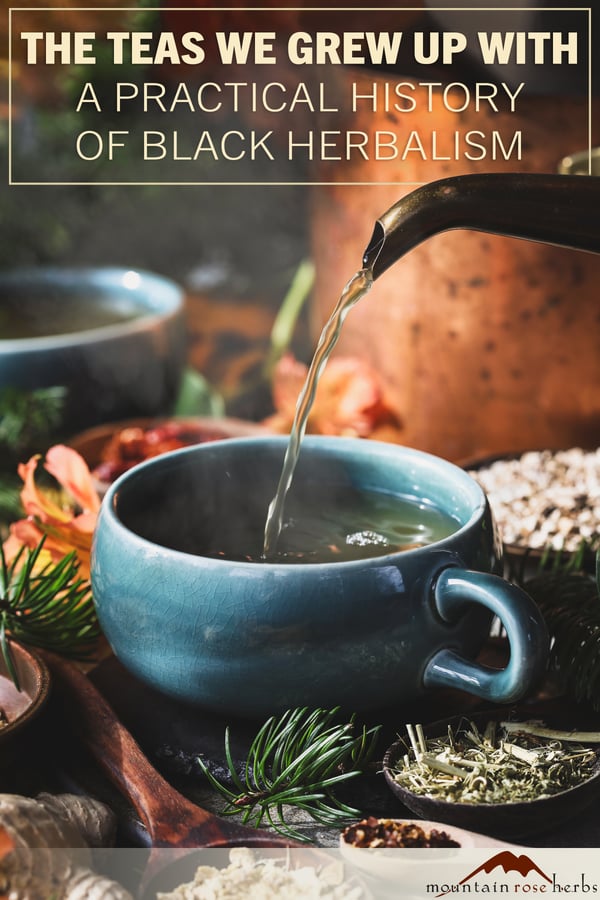
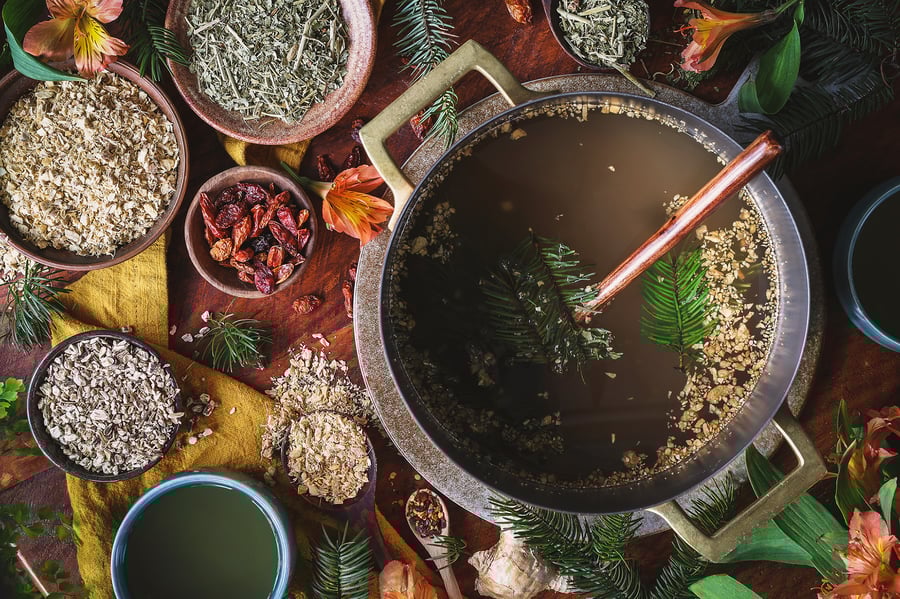
Most remedies began as teas, but not in the modern sense of a delicate cup steeped for five to ten minutes. These were strong infusions and decoctions, made to pull nourishment and medicine from bark, roots, and other tough plant material. A pot would sit on the stove or over a fire, water slowly darkening as the plant matter gave itself up.
You can almost hear it if you slow down long enough—the soft clink of a metal spoon against the side of the pot, the swish as someone lifts it to carry closer to the heat. Roots like sassafras, sarsaparilla, mayapple, or ginger were simmered low and slow. The air stayed heavy with steam, sharp and sweet at the same time, settling on the skin and clinging to clothes long after the pot was moved. Leaves and needles were added later. The tea might be strained or left as-is, poured into jars or cups to be taken throughout the day.
How Often They Were Used
A pot stayed on the stove, not all day at once, but often enough. Pour in the morning, reheat later, and finish before night. Sometimes it started again the next day. This was the daily rotation as a response to the everyday battles they faced. Poor ventilation. Damp floors. Rooms that held heat and moisture. Too many bodies sharing too little space. Food stretched thin. Work that didn’t pause just because someone felt unwell. Something was always settling somewhere in the body, and the tea was already there waiting.
Who Made the Remedies
This medicine was rarely made by one person alone. There were many hands involved: older women, midwives, mothers, fathers, and children sent to fetch water or roots.
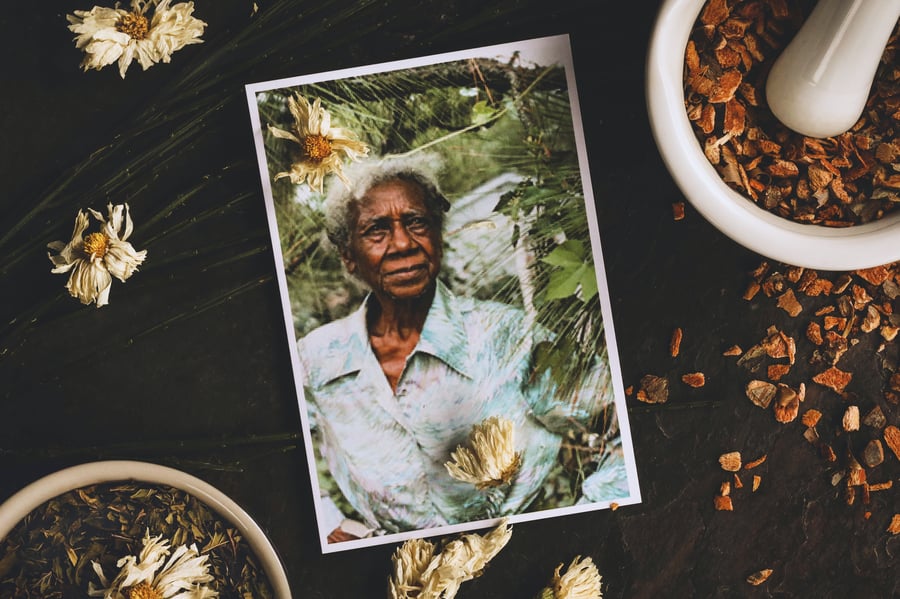
Emma Dupree, known in North Carolina as Little Medicine Thing, tended gardens and gathered herbs for her neighbors. She became the doctor for her community and never charged a cent. During the 1918 influenza, she recalled toting her tea to help people get through it.
Her garden-grown pharmacy included sassafras, white mint, double tansy, rabbit tobacco, maypop, mullein, catnip, horseradish, and silkweed. She also foraged along the Tar River. What she made depended on the person standing in front of her, not a formula on paper. (Little Medicine Thing: Emma Dupree, Herbalist)
Jane Minor, also called Gensey Snow, was an enslaved healer in Virginia whose nursing skill was so valuable that her owner freed her during an epidemic. Afterward, she used her earnings to help free others.
Even conductors on the Underground Railroad had to know plants to survive. Historians note that common plants used for sustenance included sassafras, black cherry, and paw-paw. (Smithsonian Magazine) Wild lettuce was made into a drink when women needed control over their cycles. (Working Cures, Fett, p.74) Knowing what to brew, what to chew, and what to avoid, meant the difference between moving forward or stopping altogether.
People moving north learned to read the land. Birds and the moss on the left side of the trees showed them which way was north (Freedom). The bark from the trees could be stripped and shaped into shoe liners. With no money and no rights, the land had to be enough.
In those days, Granny midwives also carried particular authority. They were trusted not just because they knew herbs, but because they understood bodies, especially women’s bodies. They knew when to strengthen, when to cleanse, and when to leave well enough alone.
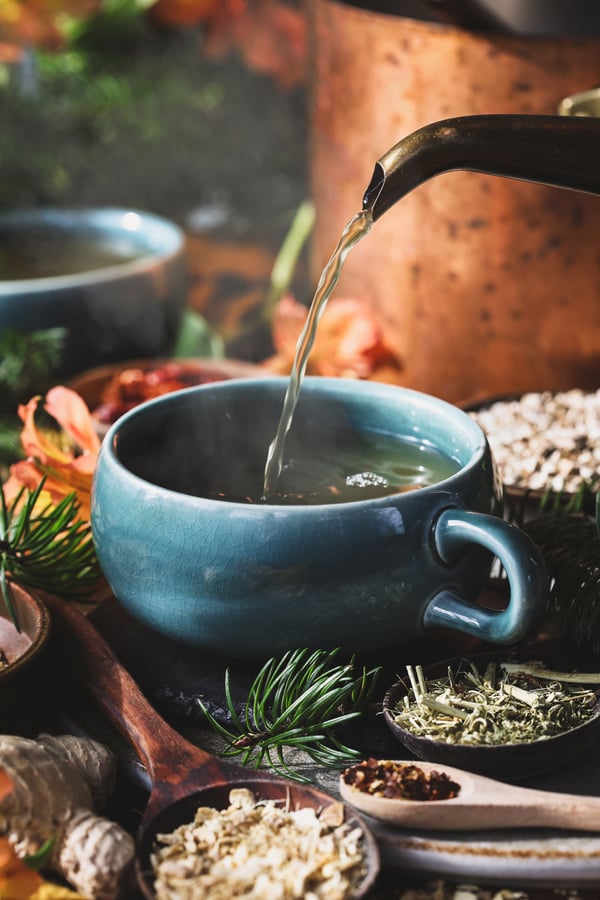
Common Herbs Used in Black Folk Medicine
The plants most often used were those that grew close by, could be traded easily, or could be tended in kitchen gardens and forest edges. These included:
- Sassafras and sarsaparilla - for cleansing and blood support
- Ginger root - for digestion and warming the body
- Pine needles - rich in vitamin C and respiratory support
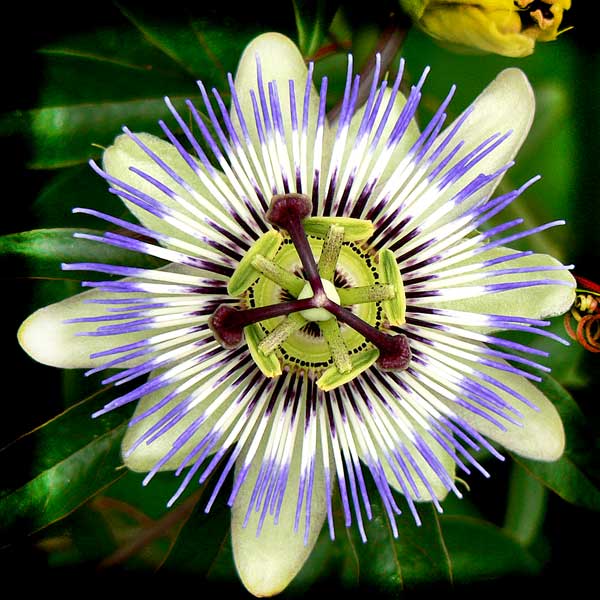
- Maypop (passionflower) - calming and anti-spasmodic
- Boneset - traditionally used to support body temperature regulation
- Red pepper - to stimulate circulation and bring warmth
- Burdock - the root was eaten or prepared as a tea to support cleansing and digestion
- Asafetida – commonly used in bags around the neck to ward off sickness
Burdock root was sometimes eaten directly, other times ground and taken as tea. According to (African American Slave Medicine of the 19th Century) published on the Bridgewater State University website, Asafetida was prepared similarly. (vc.bridgew.edu) Enslaved healers used many of the same plants as their white counterparts, but often in simpler forms: snakeroot, mayapple, red pepper, boneset, pine needles, comfrey, and red oak bark, to name a few. Teas or poultices were made with one or two plants. Scholar Sarah Mitchell Cotton speculates that slaves had less time to gather ingredients and less time to prepare complex mixtures. Others argue it reflects a deeper understanding of each plant’s properties. (Fett, p.74)
Sassafras root tea was a popular seasonal cleanser and was believed to search de blood for what was wrong and go to work on it. Jimsonweed was used for rheumatism. Chestnut leaf tea for asthma. Mint and cow manure tea for consumption. They understood the various ways to use the pokeweed plant and how to avoid its toxins.
It Lives On Today
Black herbalism morphed into southern herbalism, and later as the folk medicine we see today. With limited resources and forbidden formal education, they proved that herbalism is more than learning facts and memorizing actions. It’s more than last resort reliance and symptom fixing. To them, it was a revival (of culture), restoration (of body and mind), power in their hands, faith in their hearts, and joy in their bellies. As I say often: Buying herbs is easy. Building knowledge is work. This is the medicine that was carried forward.
Want to Learn More From KhadiYah?
Check Out Her FREE Ebook Here!
You may also be interested in:
- Living in the Legacy of African American Healers
- Reclaiming Food Sovereignty in the BIPOC Community
- Poems of Perseverance: A Reflection on Black Herbal Legacy
Sources: Brooklyn Botanic Garden; Sharla M. Fett, Working Cures, pp. 74–76., Smithsonian Magazine, Little Medicine Thing interview, The Daily Reflector, WGP Foundation