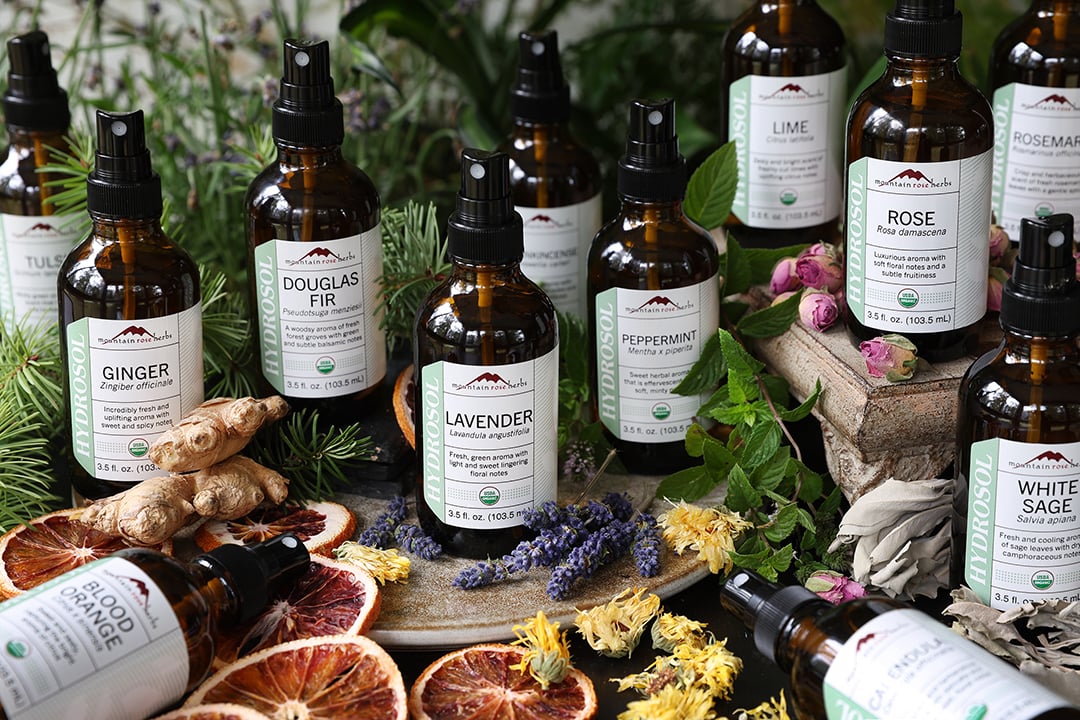
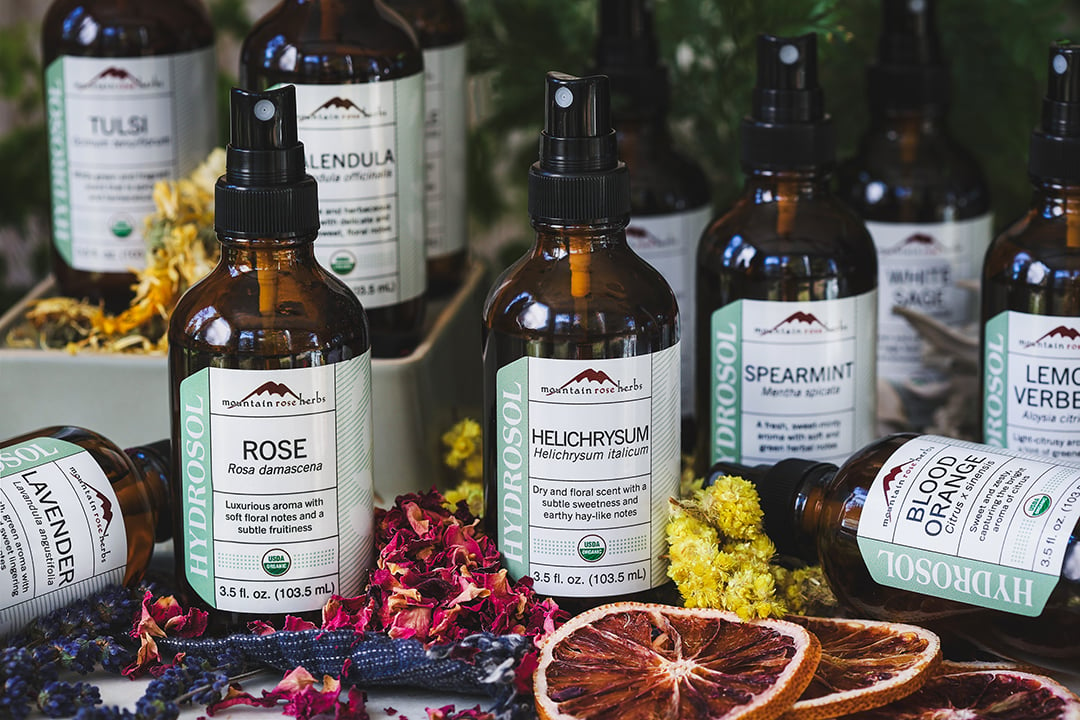
Despite the long tradition of distillation, the word hydrosol has become increasingly ambiguous. In the US, much like essential oils, hydrosols (or hydrolats) are unregulated, and products marketed under that name can be very different from one bottle to another. Distillation of hydrosols is an ancient art in which the distiller undertakes the no-small-task of mimicking the inspiring water cycle we witness here on earth; just on a micro-level, inside of their still. Have you ever made soup, put a lid on the pot, and when you took the lid off, there was clear water on top of the lid? That is a distillate of your soup, and it is the simplest way to understand where hydrosols come from.
One of the most important ingredients in healing of any kind is one too easily discounted or overlooked. Drawing us to herbalism, filling us with purpose, and activating our lives’ formulas is a distillation of hope from the stretch and reach of plants as they sprout and spread. Their active elements not only survive seemingly insurmountable heat, but are vitally transformed by it—purified and propelled. It’s at the very heart of any kind of healing work, as we’re impelled by empathy and concern to hope for the best results, for reductions in suffering, for the fastest and longest lasting recoveries.
Read More
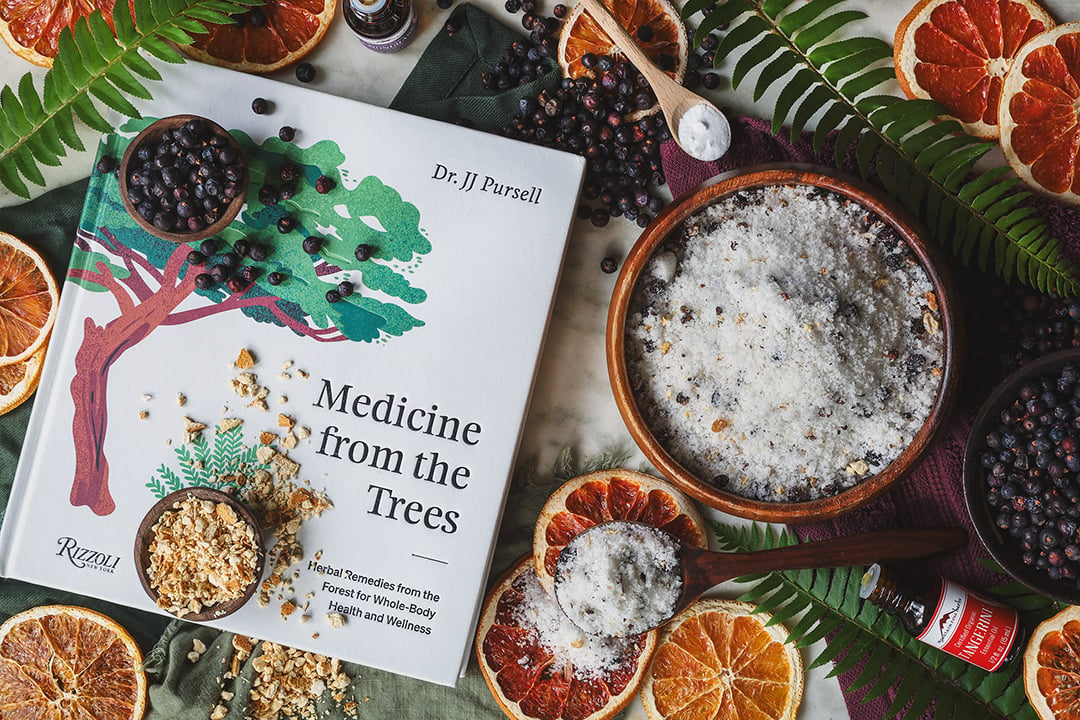
It is said that no two junipers are the same; each twisted trunk is as uniquely identifiable as a person's face. The tree’s structural differences vary based on where they grow, the climatic changes it experiences throughout its life, among other variables. Some turn toward other trees, and some turn away. Some have split trunks and grow up and around boulders, while others twist so severely that they turn back down on themselves and creep along the ground. They remind me of a fingerprint whorl with endless unique loops and personalities.
Read More
In many corporate settings, the stakeholders who receive the most attention are those in the boardroom or among the shareholders. At Mountain Rose Herbs, we see every person who brews a cup of our tea, takes our organic herbal supplements to support their health, or works with botanicals as a vital stakeholder.
Read More
We often get excellent questions and comments from the Mountain Rose Herbs community that inspire us on product ideas, blog writing, and more. We recently had a question about the difference between whole and standardized herbal products and how to choose which to use. We are so glad you asked that!
Myrrh (Commiphora myrrh) has been a cherished botanical for thousands of years. Native to the Horn of Africa and the Middle East, this sacred tree has been called upon for traditional medicine, religious incense, and perfumery for over 5,000 years. It has a long lineage of folklore and spirituality, and was so prized that it was used to anoint kings and scent the fabrics of pilgrims traveling to holy places. It's no less adored today.
Lavender (Lavandula angustifolia) has long been loved for its pleasing and relaxing scent. We know that it was used by people in the Mediterranean for at least 2,500 years, and judging by our continued frequent use of lavender in candles, bath products, and even detergents, lavender isn't going out of style. If we didn't know better, we could dismiss lavender as a good-smelling plant and leave it at that. But lavender has two stories to tell. The first is that the smell is a surprisingly important part of its wellness-supporting qualities. The second is that this complex plant has many benefits beyond its scent.
When many of us hear the name Fire Cider, we think of a common immune-supporting oxymel made and enjoyed in the autumn and winter months. But this herbal tonic can be used in myriad ways throughout the year. Fire Cider is a popular herbal folk remedy invented by esteemed herbalist Rosemary Gladstar. The preparation is made by infusing apple cider vinegar and honey with wellness-supporting ingredients such as horseradish, garlic, onion, ginger, cayenne, and sometimes turmeric and rosemary. The result is a timeless and tasty herbal preparation found in the pantries of herbalists around the world.
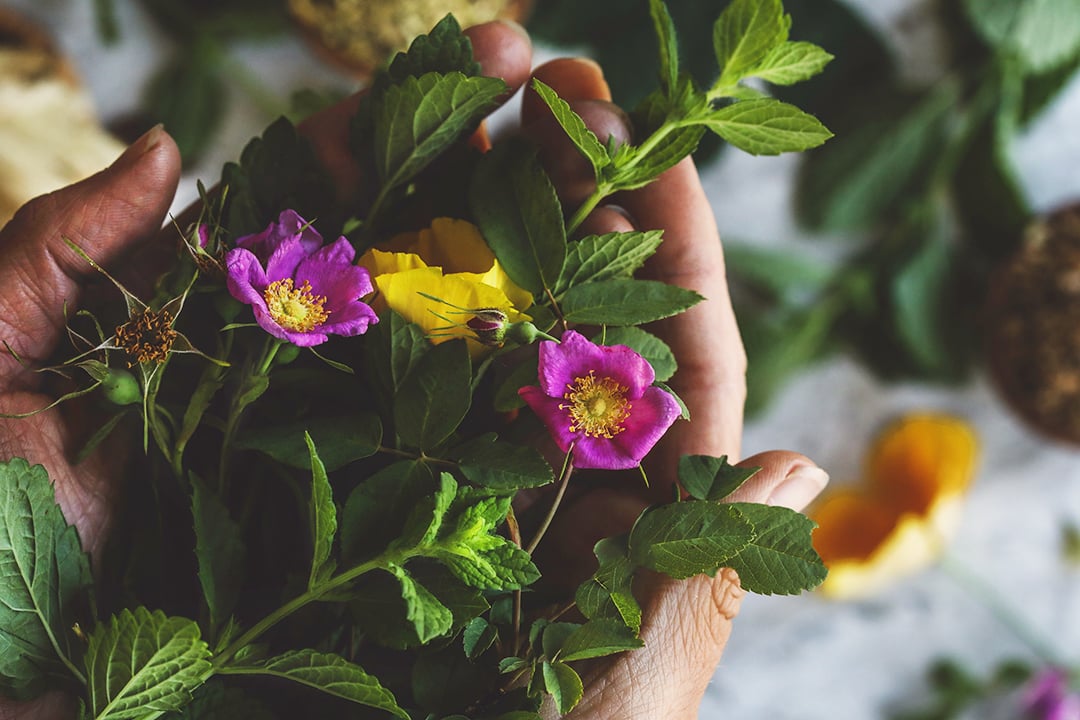
As we learned in part one of this Elemental Herbalism series, the Elements are archetypal mirrors of the natural world within and all around. They reflect the cycles of the seasons, the cycles of our lives, and the sacred ecology of our individual and collective bodies and Spirits. In this article, we look to the South, welcome summer Fire, and explore roses, people’s medicine.
Read More
All of us here at Mountain Rose Herbs are excited to connect with you at events this year. We now have an event calendar that can be sorted to show events at each of our stores in Eugene, Seattle, and Palm Springs, as well as community events that we sponsor and support around the country.
Please note that this is an ever-evolving calendar, and we will continue to add more events throughout the year.
We can't wait to see you out and about!
Through the ups and downs of planetary, interpersonal, and intercultural changes, plants have always accompanied, inspired, and nourished us. We are surrounded by plants. We eat, wear, live in, and live by plants. Plants remind us of what’s most important: sun, soil, water, time in nature, friends. The power of slow growth and mycelial interconnection, of building communities and sustaining mutual flourishing.
Read More