
Dandelions tell us that spring is here! Often among the first flowers to emerge, especially in northern climates, dandelions bring important early nectar to honeybees and lift the hearts of all who anticipate longer days and warmer temperatures. The golden orbs fill lawns and meadows and even appear between the cracks in concrete. Dandelion is both tenacious and generous, and is one of our most-needed plant medicines.
Read MoreIt’s nettle harvest time! How humans came to figure out that nettles are a powerhouse of goodness is beyond me. They contain potassium, calcium, magnesium, iron, zinc, and a treasure trove of other vitamins and minerals. But as a kid growing up in the Coast Range of western Oregon, my entire relationship with nettles involved trying not to get stung by those wicked trichomes while romping through the woods. So, kudos to the first brave nettle-harvesting souls, because they figured out (as I now know) that harvesting nettles without getting stung is actually easy, and this puts urtica dioica on my list as a versatile and delicious herb.
Read More
I distinctly remember the first time I tried mochi. I was adorned in a kimono that was provided by the kindergarten I attended on the island of Oahu, and we were celebrating Hinamatsuri, or Girls’ Day, a spring festival that takes place every March 3 to celebrate the health and well-being of young girls. The tender, sweet, and gooey-textured mochi cake had me hooked from the very first nibble. Mochi is a traditional rice flour cake consumed year-round in Japan, but often is reserved for special occasions and holidays.
Read More
My son and I have been studying permaculture, and one of permaculture’s primary principles is called “stacking function,” a concept whereby you’re getting many yields from one element. As a busy mom, simplicity and stacking function have become guiding principles in my own life—"fill two needs with one deed” is my motto, and this also applies to my herbal medicine endeavors. There are many ways to prepare herbs, but few herbal preparations stack function in the way that herbal vinegars do!
Read More
Sometimes soup is simply a necessity. When the bitter chill of winter bites and the pantry is stocked with odds and ends, I like to give a whirl at piling anything tasty into a pot, then crossing my fingers for a delicious result. This time around, it was sweet potatoes. I knew their sweet and earthy aroma would go nicely with an Indian curry blend and one of those half dozen cans of coconut milk I seemed to be hoarding.
Read More
St. Patrick’s Day is one of those holidays that delights the comfort-foodie in me. Within my circle of friends, it’s been known to inspire Jameson-fueled quests to perfect the finer points of Irish soda bread. Although people often think of soda bread as being a product of Ireland, it’s actually an American invention that shows up in many cuisines around the world because of its simplicity, and the results are SO good! It’s a quick, one-bowl process and, because it relies on a chemical reaction between baking soda and a moist acid like buttermilk, the bread requires no resting or rising. In truth, soda bread is more or less a big biscuit. This five-seed, Himalayan-salted version retains the super-easy nature of traditional soda bread while seriously upping the nutritional content and flavor by adding whole wheat pastry flour and aromatic seeds. Whether you’re aiming for a perfect St. Patrick’s Day loaf, or you just want to try your hand at one of the world’s simplest bread-baking methods, this seeded soda bread may be just the answer!
Read More
Miso soup is an absolute must for me during the winter months. I’ll often make a large batch of it and warm some up for breakfast, cracking an egg into the umami-packed broth. It’s a common staple served at Japanese and Korean restaurants, often simply garnished with bits of tofu and chopped green onions. The two main components to miso soup are dashi and miso paste. Dashi is typically made with preserved fish and kombu, a flavorful and nutrient-rich seaweed. I decided to try making a vegan dashi stock using dried shiitakes along with my seaweed, and was pleasantly surprised.
Read More
When the work day is done, many of us begin thinking about what to cook for ourselves and our families. On days that I’m hungry as soon as I walk through the door, I am always grateful when my meal is ready for me. It prevents me from eating things I otherwise wouldn’t or shouldn’t. With my busy lifestyle and Italian appetite, I’ve developed a real appreciation for slow cookers!
Read More
Making homemade tahini is both fun and easy. Tahini’s unique flavor can enhance a variety of dishes, most commonly hummus and other dips. With its roasted and ground sesame seeds, this savory and nutty tasting paste is even better when blended with hemp seeds.
Read More
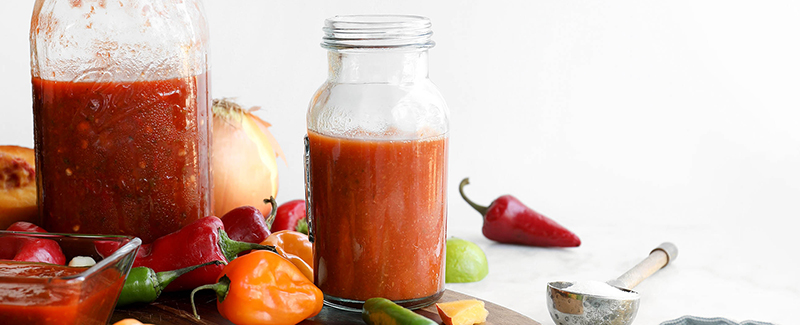
I didn’t grow up eating spicy foods. As embarrassing as this is to admit now, the thought of eating food that was spicy was actually scary to me. I felt like I never knew what I was getting into and as far as I was concerned, eating something too spicy was crossing the line of no return and would ruin my whole meal. That is, until I learned how to properly cook with them!
Read More
Brassicas—that genus of plants in the mustard family that includes broccoli, cauliflower, cabbage, and brussels sprouts, among others—have not always been my vegetables of choice. I blame the fact that I was a child of the 70’s: bell bottoms, 8-track tapes, rotary phones…and seriously overcooked vegetables. My father was considered a “health nut” who insisted we eat whole grains and sprouted seeds, and that we take a daily dose of what he called mushroom tea, now commonly known as kombucha. However, outside of our home, it was a weird time for food, an era when a popular party and potluck dish called “Watergate Salad” was made from a horror list of ingredients that included marshmallows, instant pistachio pudding, and a whipped topping of high fructose corn syrup and hydrogenated oil. But, in my opinion, it was the abused vegetables that were the worst. Bowls of once healthful veggies were commonly presented as limp, cooked-to-death wastelands. No wonder I spent years thinking I didn’t like brassicas.
Read More